
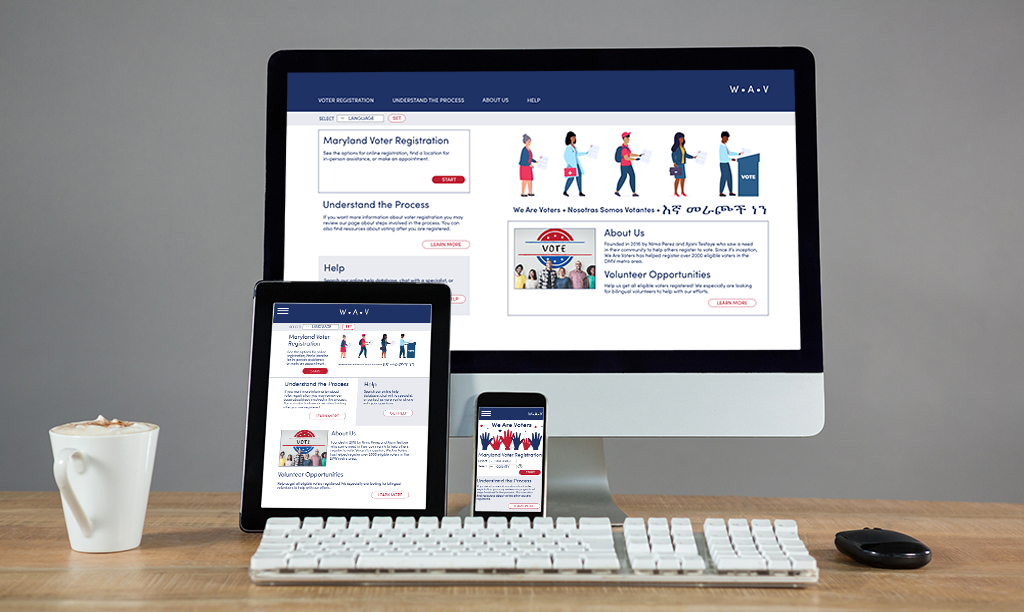
Case Study: We Are Voters dedicated mobile app and responsive website
My role: UX Designer
Tasks included conducting user research, paper and digital wireframing, low fidelity and high fidelity prototyping, usability studies, accounting for accessibility, iterating on designs, responsive design.
Project goal: Design a dedicated mobile app and corresponding responsive website to make it easier for first generation immigrants in my community (southern Montgomery County, MD) to register to vote.
Target audience: The target audience for the dedicated mobile app was Gen Z first generation immigrants. The target audience for the responsive website was Baby Boomer and Silent Generation immigrants who are less tech-savvy.
• Per Pew Research, the largest immigrant populations for Maryland are Latino (Central America) and Africa (Eastern and Western). The main languages spoken are Spanish, Amharic, and French. Nearly 4 in 10 say they speak English less than well. Nearly half of immigrant eligible voters are of the baby boomer or silent generation.
• Per civilrights.org, one in four unregistered voters cited recently changing their address, forgetting to register, time constraints, and confusion over how to register for reasons for not registering to vote. This percentage is even higher for gen Z (42%).
User personas:
Two user personas were created based on the target audience:

Javier is a busy college student who needs a simple way to register to vote because he wants to participate in the upcoming local election.
Zenebe is a non tech-savvy grandparent who needs a way to register to vote with guidance in her native language because she is not confident in her English speaking ability.
Competitive Audit:
A competitive audit was conducted to understand the current options. I looked at Rock the Vote, usvotefoundation.org, and local elections.maryland.gov sites.
Gaps identified:
- Competitors did not have language specific support (all)
- Local maryland.gov website only had language support for paper forms, not online forms
Opportunities discovered:
- Create a more informative experience
- Provide language support
- Provide help features
User Research: Two moderated usability studies were conducted, surveying 5 participants each. The studies were conducted in participants homes for 10-20 minute sessions.
Findings from the first study were used to inform design modifications for refined visual mockups and a high-fidelity prototype.
Sketches and wireframes:
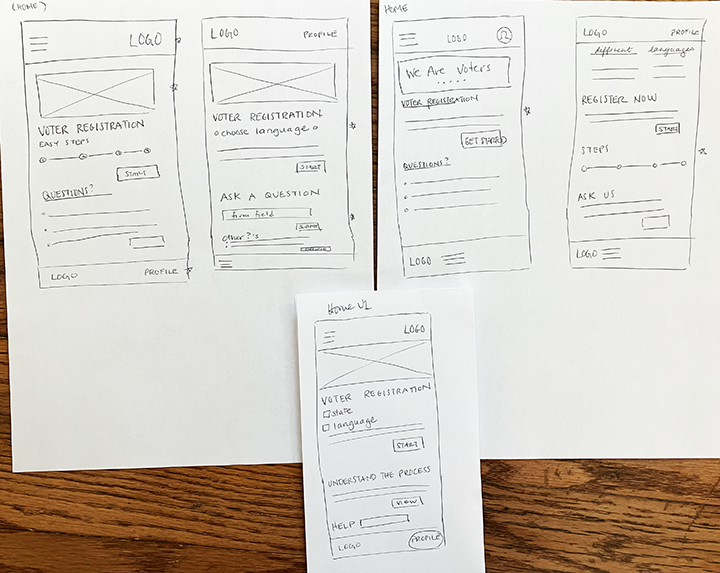
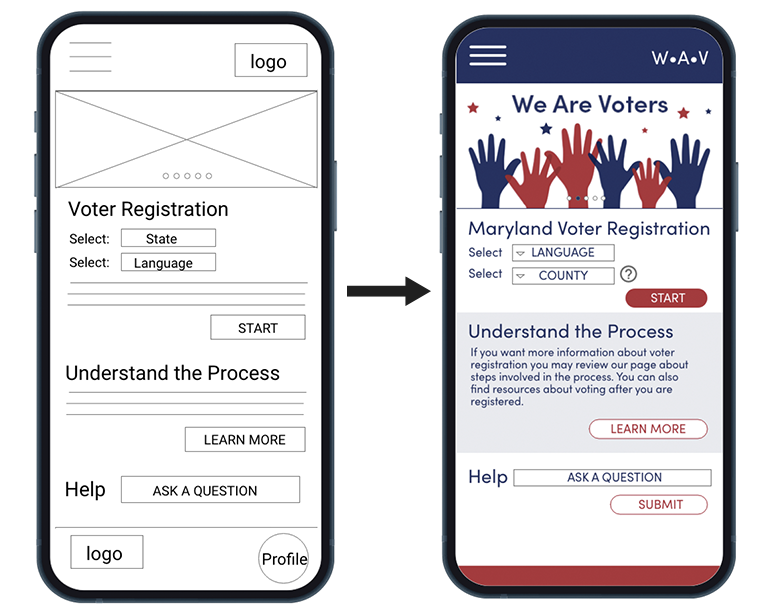
Based on the paper wireframes, digital wireframes were created and turned into a low-fidelity prototype for the first round of user testing
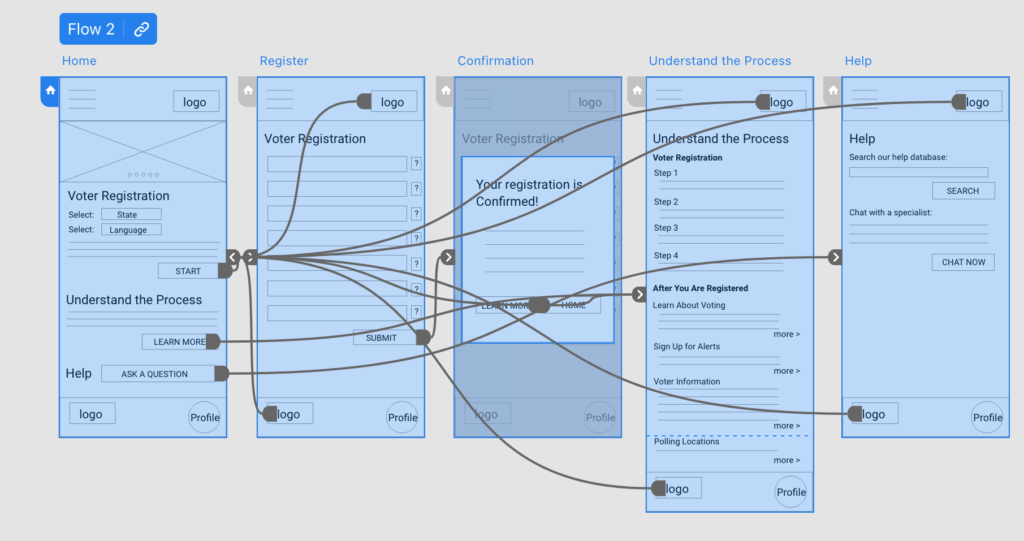
Improvements implemented based on User Testing:
Based on insights from the usability studies, I made design changes such as moving the language selection order and eliminating the profile section.
Final Designs:
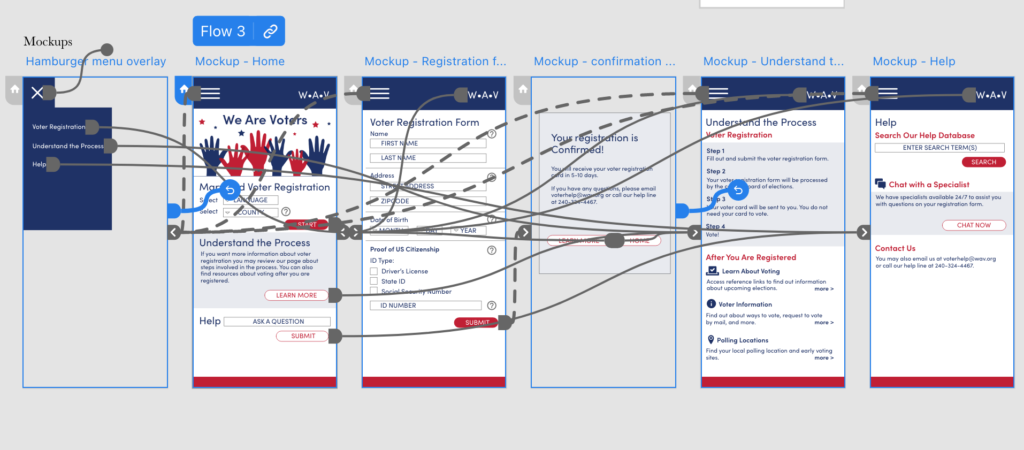
Key Mockups:
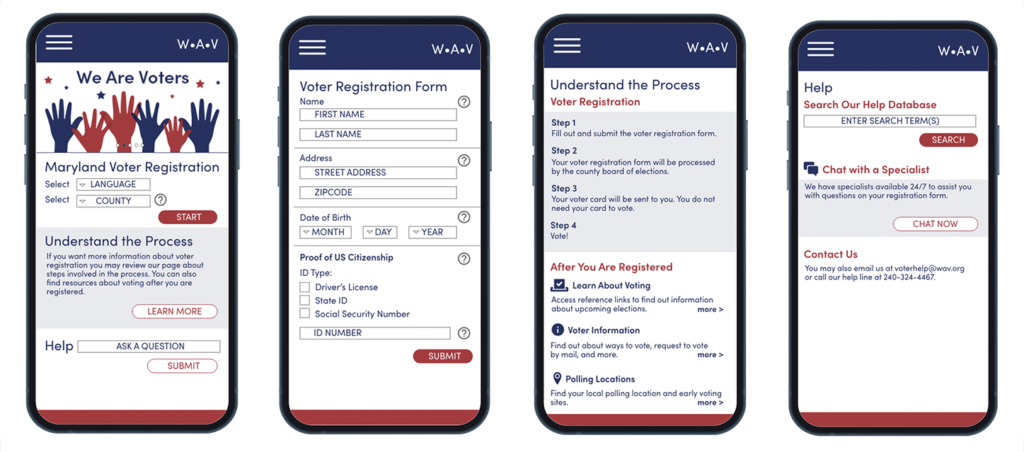
Responsive Web Design:
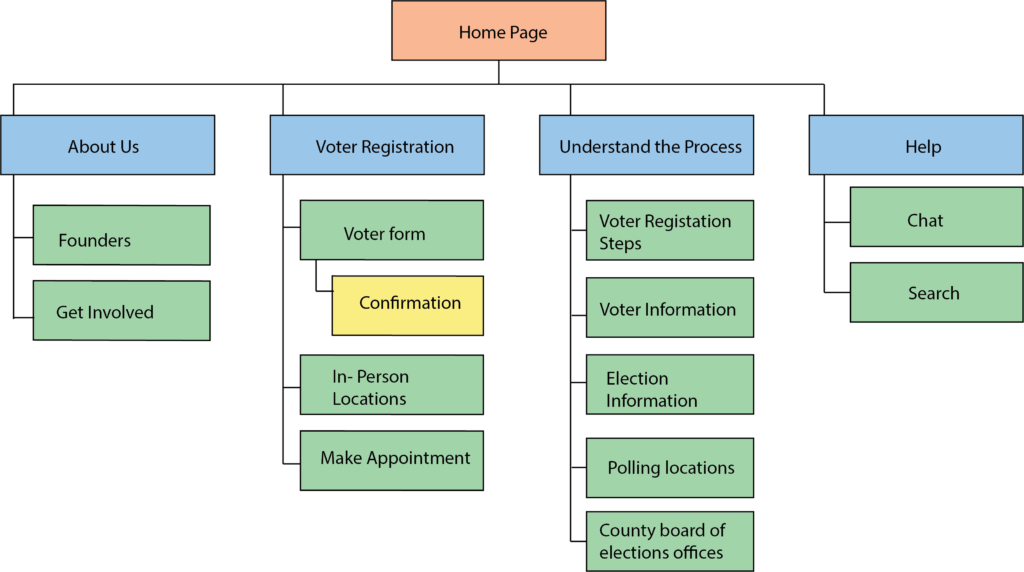
After I completed the app designs for We Are Voters, I started working on the corresponding responsive website. I created a site map to guide the organization of the website.
Designs:
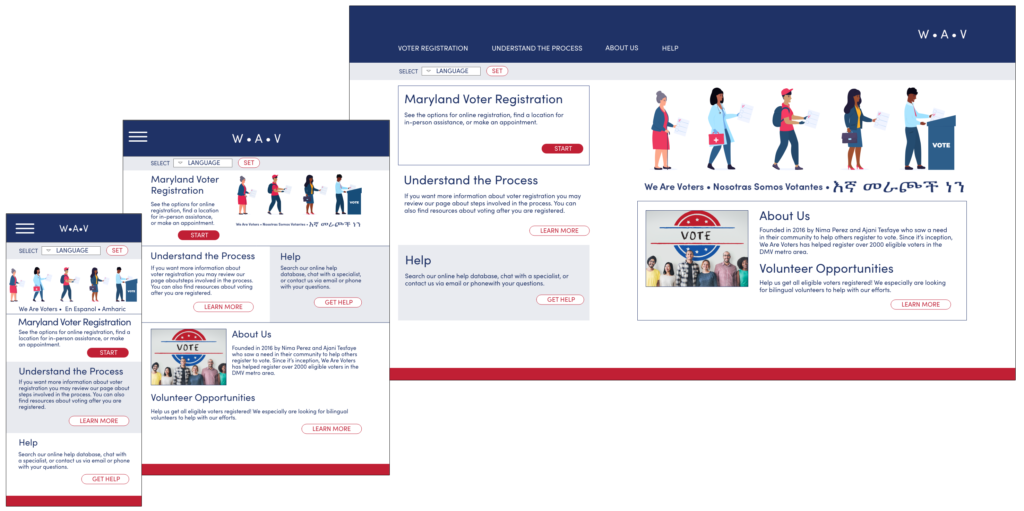
The designs for screen variations included mobile, tablet, and desktop. Designs were optimized to fit user needs for each format.
Conclusions:
The target users shared that they liked the design and found the app and website easy to navigate. They were particularly positive about the help features.
Next steps for the project:
• Conduct further research to see how effective the app and website are for registering new voters.
• Add more links to resources for voting and information.
• Expand to other states and locations, based on each community’s demographics.